





In travel technology, supply acquisition depends on how quickly teams can adapt creative to shifting market conditions. Rental economics change fast, competition varies by region, and owner motivations differ across every market you enter. But most acquisition teams still rely on quarterly creative cycles that take weeks, leaving campaigns stalled while waiting for localized assets.
The real issue is production. Property acquisition requires market-specific messaging and rapid creative updates at scale, and manual workflows simply can’t keep up.
This is where Hunch solves the gap. Designers build a single template once, and acquisition teams control every market-level variable through structured data. Income figures, headlines, languages, visuals, and value propositions update instantly without reopening design files. Markets shift daily and your creative finally moves at the same speed.
This article is for you if:
- Your monthly spend is between 200K and 1M
- You're working for a brand in Leisure, Travel & Tourism industry
- You’re looking for a way to remove manual work, and optimize your campaigns
The property acquisition creative bottleneck
Acquiring vacation rental properties isn’t like advertising to travelers. You’re targeting owners with market-specific income potential. “Earn $2,000/month in Miami” means nothing in San Francisco, where rates triple. Each market requires localized copy, relevant property imagery, and income data that reflects actual rental economics.
You can't simply translate English to French and deploy. German property owners respond to different value propositions than Australian ones. Your creative needs to reflect that.
Why manual creative workflows break in multi-market acquisition
Quarterly refreshes that take weeks trigger cascading problems. Designers become bottlenecks. Campaigns run stale creative while waiting for updated assets. You manually upload hundreds of variations. When assets finally arrive, you rebuild campaigns from scratch, reset learning phases, and lose performance data.
Hunch’s template-based creative: The most scalable model for property acquisition
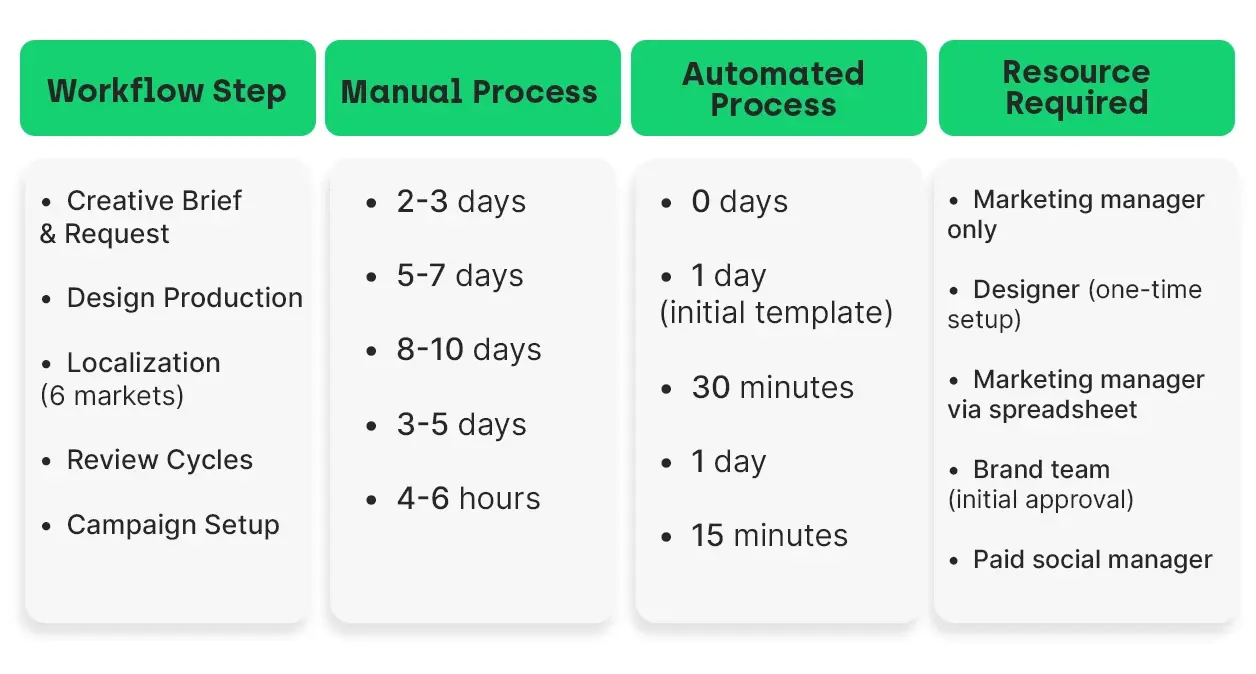
With Hunch, your design team creates one master template. You connect a structured data feed with your market inputs. The system generates hundreds of localized ad variations instantly, with no additional design requests and no delays.
Template systems separate design from execution. Designers build the initial template and define dynamic fields. After that, you control updates from a spreadsheet: headlines, images, income figures, CTA copy.
This matters for property acquisition because creative must constantly reflect local conditions. “Earn $2,000/month in Miami” becomes “Earn $6,500/month in San Francisco” without reopening Figma. Designers set the framework. You scale the variations.
Manual vs automated creative production: What actually changes
Implementation: How teams automate in 30 days without disrupting performance
Migration typically happens in three phases:
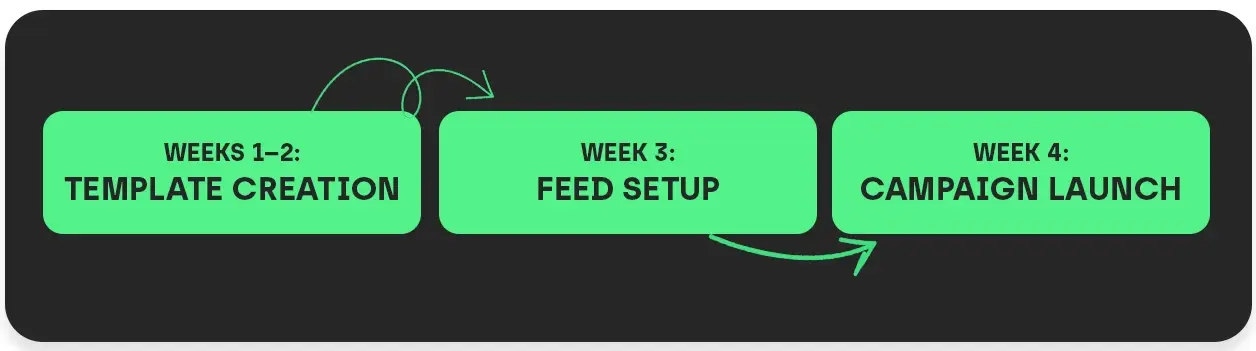
Most teams rebuild their existing campaigns during onboarding, avoiding learning-phase resets. By day 30, you launch localized variations in minutes instead of weeks.
The Bottom Line
Property acquisition doesn’t scale through tighter project management or more operational oversight. It scales when the creative system itself becomes flexible enough to keep up with market changes. Manual updates slow teams down. Hunch removes the production bottleneck entirely.
Designers build the creative framework once. Your acquisition team controls market-level inputs through structured data. Campaigns update instantly. What used to take three weeks becomes a 15-minute change. If you want to break the cycle of stalled creative, start by testing one template in one region. Prove the workflow. Then scale it across your entire acquisition portfolio.
