





Paid social teams in the B2B SaaS space often face a paradox: they have the data to know their ads are failing, but lack the infrastructure to fix them in real-time. You likely recognize the signs: performance is strong for the first 14 days, but by week three, your Cost Per Lead (CPL) begins to climb.
Because traditional workflows rely on manual design for every resize and variation, you’re forced to wait on a six-week agency cycle or an overworked internal team. Hunch changes this dynamic by decoupling creative production from design hours, giving you the autonomy to refresh assets the moment data demands it.
TL;DR
- B2B SaaS teams need 25-30+ creative variations monthly across products and personas, but production can't keep pace with testing velocity.
- Creative fatigue hits in weeks 3-4, tanking performance while teams wait on 6-week agency cycles built around capacity, not data.
- Teams scaling testing use automation to generate and launch variations in hours, decoupling production from strategy without adding headcount.
Why the traditional six-week cycle is costing you pipeline
In B2B, where target audiences are smaller and more specific, creative fatigue hits harder and faster than in consumer markets. When your frequency climbs past 3.5, the auction algorithm begins to penalize your delivery, leading to a 30-40% spike in acquisition costs by the third week. If your production workflow is built on manual requests, you are effectively paying for two weeks of diminishing returns every month.
The shift from manual labor to master templates
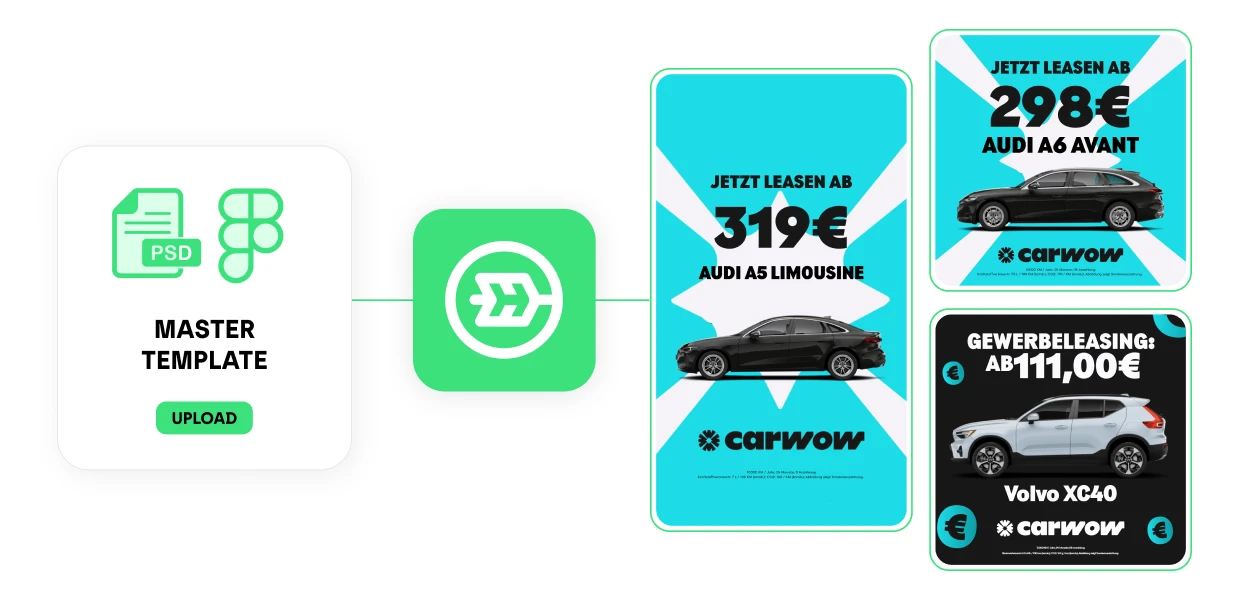
Instead of hiring more designers, solve the scaling volume by changing the nature of their work. Build a Master Template in Hunch, a design framework where headlines, images, and CTAs are dynamic. By linking this template to a data source, you can generate 50+ variations for different personas and products in minutes. This approach follows our principle of being "knowledgeable yet simple," replacing complex manual workflows with a streamlined, data-driven engine.
Implementing a multi-product creative testing strategy
We’re halfway through solving the challenge here. Having the infrastructure to spin up hundreds of creative variations doesn't automatically improve performance.
What separates teams that lower acquisition costs from teams drowning in creative variants is ruthless prioritization. You need a framework that accounts for validation speed, production complexity, and actual impact on your lead generation metrics.
Prioritizing what to test first
Not all creative tests deliver equal insight or require equal effort. When you're managing campaigns across five products and multiple buyer personas, you need a clear hierarchy.
.webp)
Start with message and CTA tests-they validate fastest and require minimal production lift. Visual tests deliver bigger swings but need more time to reach statistical significance. Format tests between static and video carry the highest production complexity but can unlock entirely new performance levels for specific products.
Managing Refresh Cadences by Product
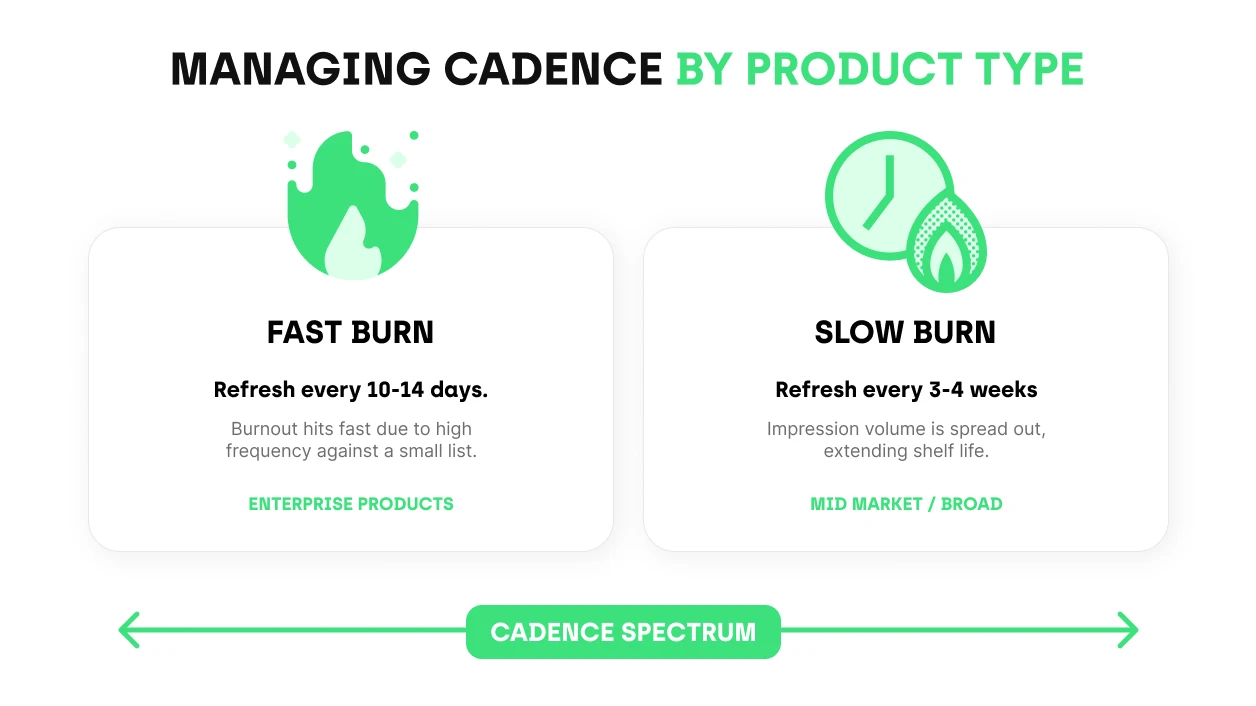
A high-touch enterprise product won't see creative fatigue at the same rate as a high-volume solution aimed at the mid-market. Factors like audience size, impression volume, and competitive intensity all dictate how quickly your creative burns out.
Monitor frequency metrics at the product level. When the same users see your ads 4-5 times within seven days, creative fatigue accelerates. For products with smaller addressable audiences, you'll need fresh creative every 10-14 days. Products targeting broader segments can run 3-4 weeks before refresh becomes critical. The key is decoupling refresh timing from fixed agency schedules and aligning it with actual performance degradation.
Building sustainable creative testing with Hunch
Sustainable testing operations require three components: dynamic template infrastructure, streamlined approval workflows, and streamlined workflow between paid media and creative teams. Platforms designed for creative automation handle the first piece: your team builds templates once, then generates unlimited variations through structured data inputs.
The approval workflow determines velocity. When your creative director needs to review 30 variations manually before launch, you've created a bottleneck. Build approval checkpoints into your spreadsheet-based workflow so stakeholders review template structures upfront, then trust the system to generate on-brand variations. This shifts creative team involvement from tactical production to strategic template design.
The real advantage of creative automation isn't just speed-it's the strategic capacity you unlock when campaign building no longer consumes 10 hours weekly. That time converts into testing strategy, performance analysis, and the kind of thoughtful optimization that actually moves qualified lead volume.
The bottom line: Reclaiming your strategy through automation
The ultimate benefit of automating creative testing with Hunch is the strategic capacity it returns to your team. When you are no longer consumed by the "how" of getting ads made, you can focus on the "what", the insights and hypotheses that actually move the needle for your business.
Hunch acts as a fearless partner in this process, providing the tools to disrupt your current constraints and build a more resilient demand generation engine. By automating the production floor, you free your best minds to focus on the creative breakthroughs that drive long-term growth.
